How Mood Blend Studio™ Came to Be…
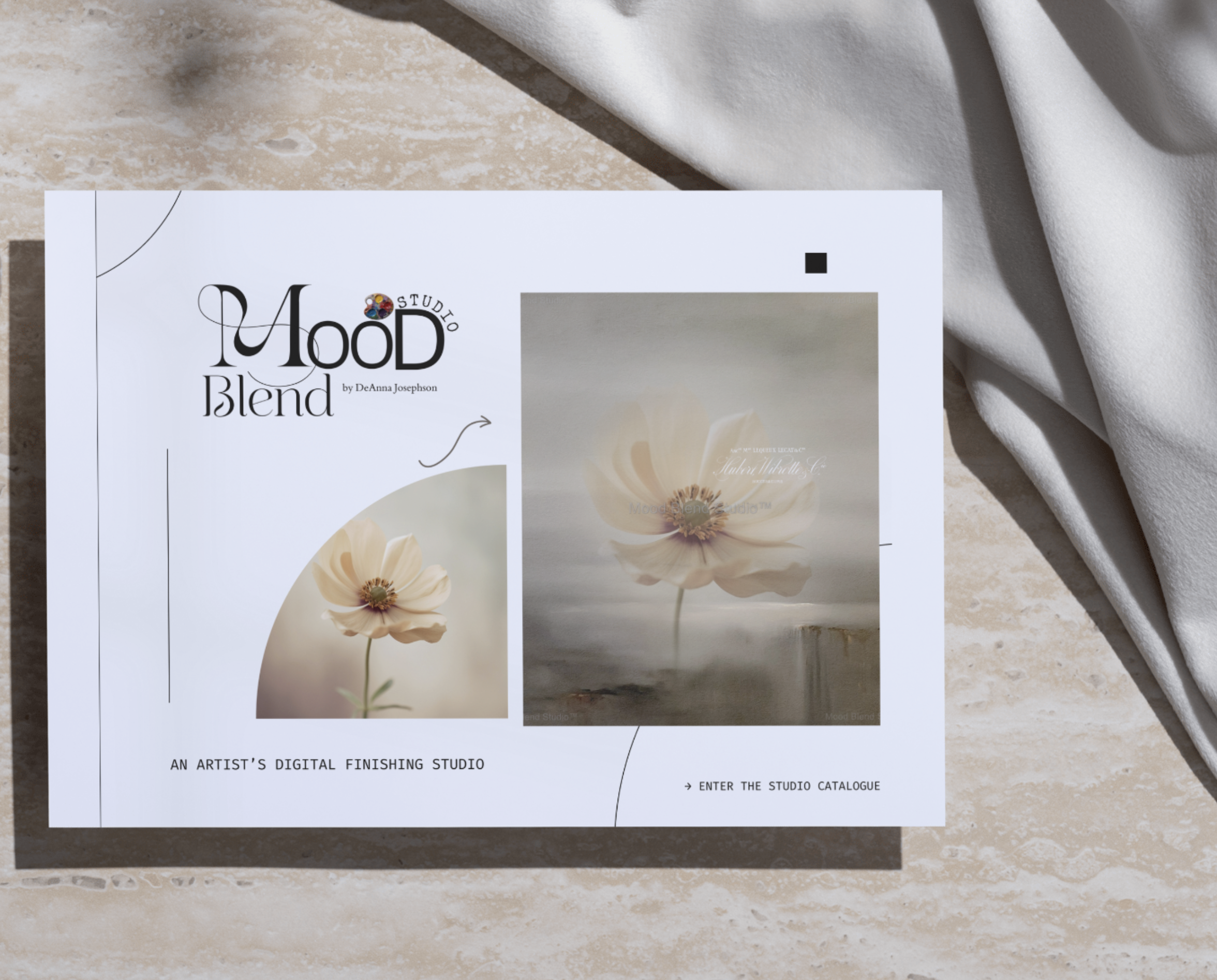
Mood Blend Studio™ An Artist-Led Digital Design and Finishing Software Tool.
An artist’s journey from layered imagery to a digital software.
For many years, the idea for Mood Blend Studio™ lived quietly in the background of my creative life.
Long before it became a piece of software, it was simply a way of working — an intuitive, layered process I carried with me through my fine art, my photography, and my graphic design practice. I have always been drawn to atmosphere, texture, and emotional quiet. Whether I was working with oil paint, mixed media, or digital imagery, I found myself returning again and again to the same gestures: layering, softening, veiling, revealing.
I wasn’t thinking in terms of tools or systems back then. I was thinking in terms of feeling.
Over time, my studio work began to take on a very specific visual language. My layered florals, subtle landscapes, and moody photographic blends were shaped slowly, through hours of quiet experimentation. I worked intuitively in Adobe Photoshop, stacking textures, adjusting tone, softening edges, and allowing the image to emerge rather than forcing it into a predefined structure.
It was never about effects.
It was always about mood.
From a Private Process to a Public Curiosity…
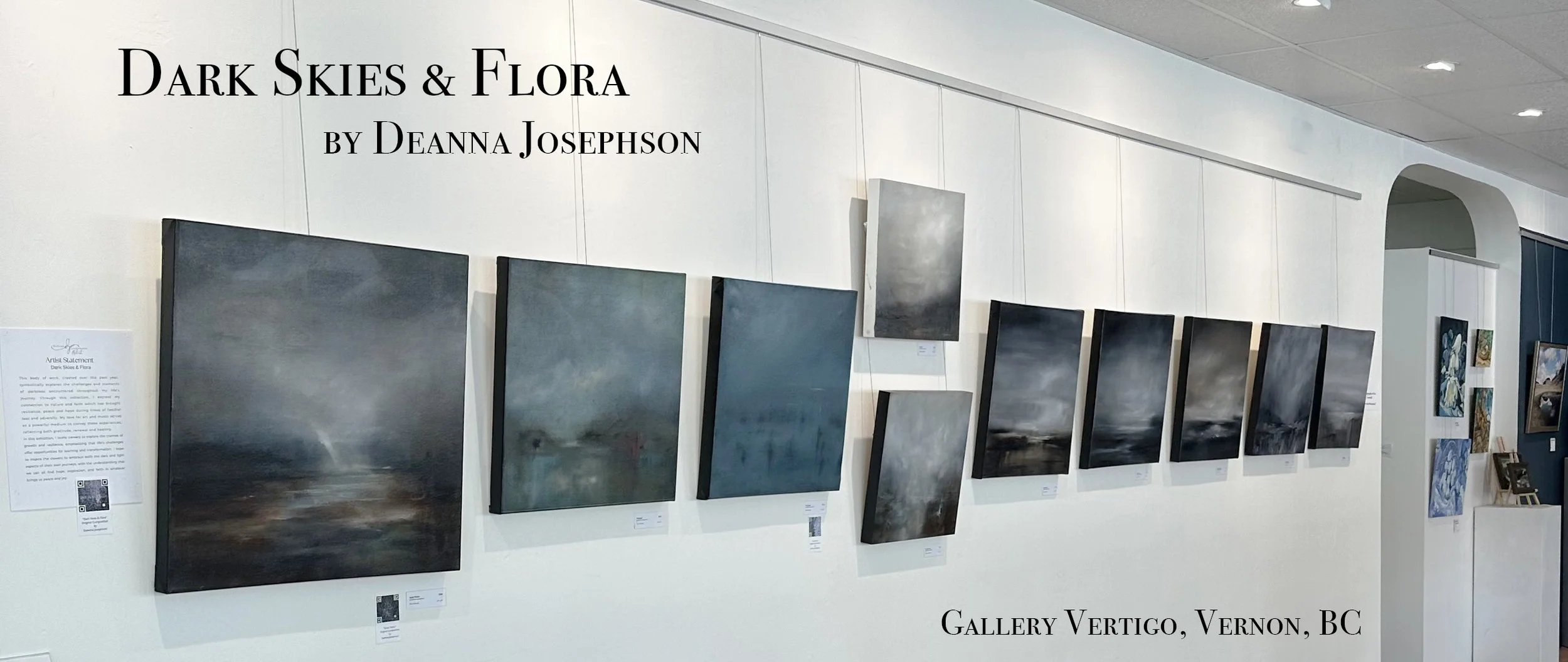
“Dark Skies & Flora” Solo Exhibition-May 2025
In May 2025, I presented my solo exhibition Dark Skies & Flora at Gallery Vertigo in Vernon, British Columbia. The show brought together my oil paintings and my flora-blend photography — two bodies of work that, for me, were always part of the same emotional conversation.
During the exhibition, something unexpected began to happen. People started asking me how the work was created. Not in a casual way — but with genuine curiosity about the process itself. They wanted to know how I layered images, how I built depth, how I created atmosphere digitally in a way that still felt painterly and restrained. Those conversations stayed with me.
For years, I had assumed that my process was too personal, too intuitive, and too slow to ever translate into something shareable. But standing in the gallery, answering those questions again and again, I began to wonder whether there might be a way to offer others a gentler, more accessible path into this kind of creation.
Not a replacement for professional software.
Not a technical training program.
But a quieter alternative — shaped by an artist’s way of working.
An Idea That Had Been Waiting…
In truth, the idea for Mood Blend Studio™ had been forming long before that exhibition.
As a graphic designer and fine artist, I had often imagined what it might feel like to work inside a digital space that behaved more like a studio than a piece of software. A space where you could begin with a photograph and then slowly shape it through tone, texture, and atmosphere — without having to wrestle with layers panels, blend modes, and endless technical decisions.
I wanted something that felt closer to painting.
Something that allowed people to respond to images emotionally rather than procedurally.
After Dark Skies & Flora, I finally listened to that long-held idea.
I took the questions I had been asked in the gallery as a quiet signal to explore whether my process could be translated into a digital environment — one that would allow others to work in the same slow, intuitive way I always had.
Building a Digital Studio…but I don’t code!
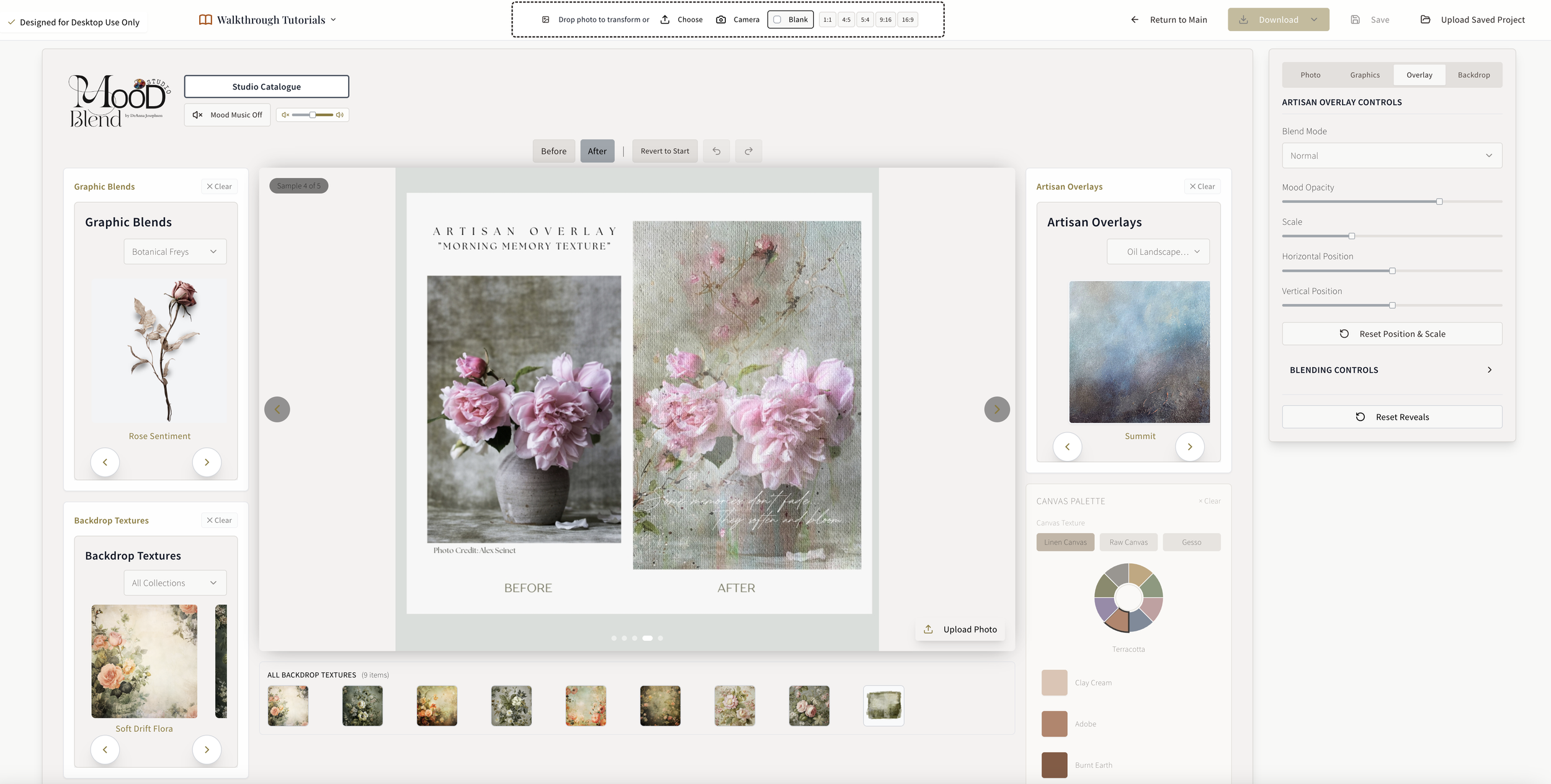
Over the past year, Mood Blend Studio™ gradually came into being through a deeply iterative, artist-led development process.
Rather than starting with a list of technical features, I began with a feeling:
What would it be like to sit down at a digital table and simply begin?
From there, everything else unfolded.
For the first time in my creative life, I found myself working at the intersection of art and modern coding tools that simply did not exist even a few years ago. These contemporary development environments made it possible to translate my intuitive studio process into a digital space in ways that would once have been unthinkable.
Through a collaborative development process, these tools assisted in shaping my vision — allowing ideas to be tested, refined, and slowly brought into form. I remained deeply involved in every creative and structural decision, guiding how the studio should feel, behave, and unfold for the user.
The software itself was shaped around the same gestures I use in my own work: layering textures, softening edges, shifting tone, introducing painterly overlays, and allowing imagery to emerge slowly through restraint.
I created the artisan overlays, textures, graphic blends and typography from my own fine art and mixed-media work — extending my physical studio practice into the digital space. These elements were never meant to be decorative assets. They were meant to function as quiet collaborators in the creative process.
Mood Blend Studio™ became, quite literally, a digital version of my studio.
From Private Practice to Shared Space.
What continues to move me most about Mood Blend Studio™ is not the software itself — but the possibility it creates for others.
For many years, my layered imagery practice existed only inside my own creative life. It was something I returned to in quiet moments, shaping images as a way of processing emotion, memory, and mood.
Mood Blend Studio™ allows that private practice to become a shared one…co-creation.
It offers others a gentle invitation into a way of working that is:
intuitive rather than technical
slow rather than performative
expressive rather than procedural
emotional rather than formulaic
It is not a tool for producing content.
It is a studio for shaping feeling.
The Studio Catalogue
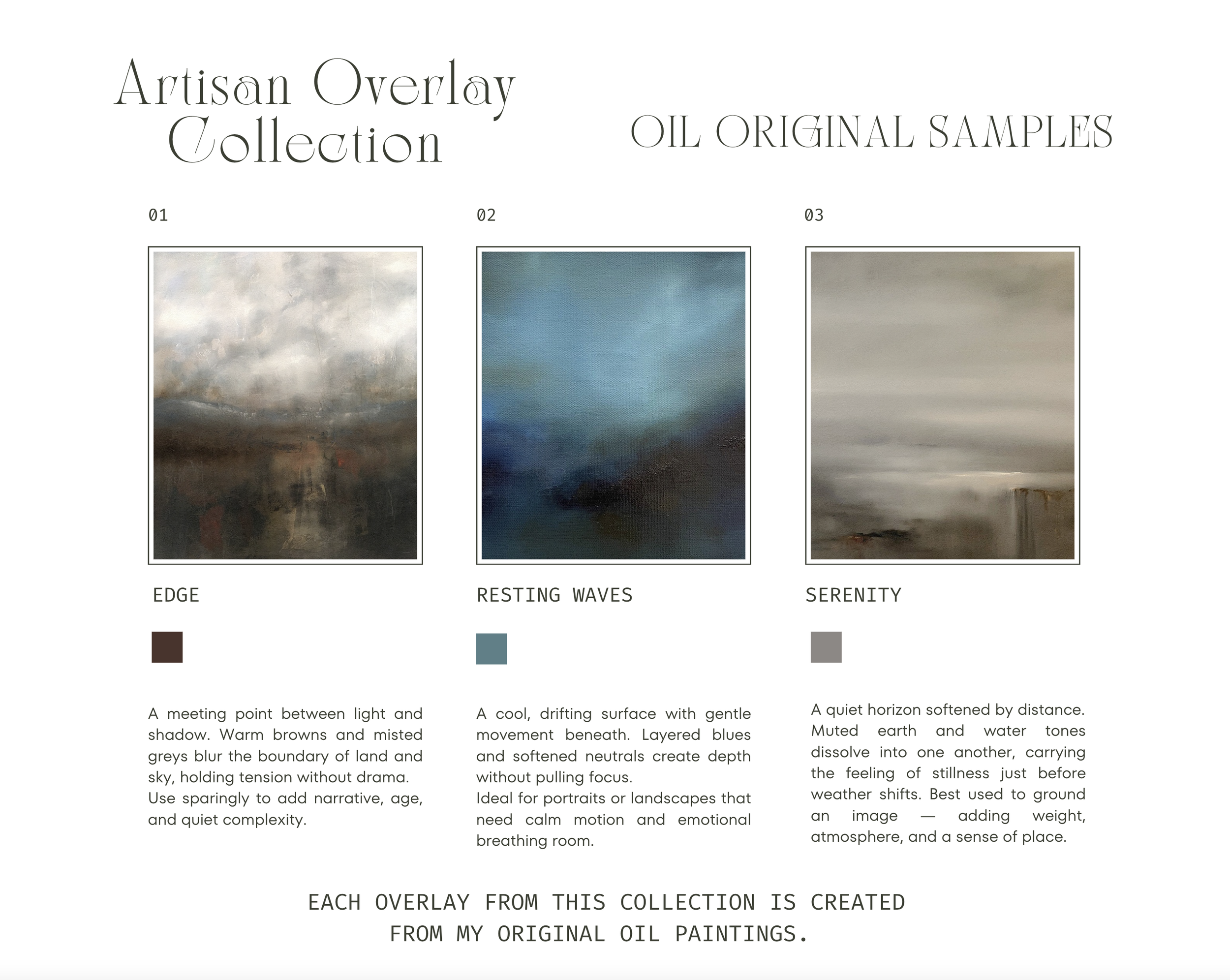
Artisan Overlays…my Oil Landscapes Originals.
Mood Blend Studio™ Catalogue Overview of Artisan Overlays, Graphic Blends and Ways to Begin…
Alongside the software, I created a Studio Catalogue — a visual companion that offers a closer look at the artisan overlays, textures, and graphic blends that live inside Mood Blend Studio™.
The catalogue is not meant to function as a product listing. It is an editorial-style artifact — a quiet window into the visual language of the studio and the materials that shape its atmosphere. It reflects the same values that guided the creation of the software itself: restraint, mood, depth, and emotional subtlety.
Sustaining the Studio
Mood Blend Studio™ is offered through personal-use and commercial-use licenses.
This distinction exists for two reasons.
The first is practical. Building and sustaining a living digital studio carries ongoing monthly costs — from hosting and development to maintenance and continued expansion. Attaching a modest price to access helps support the long-term care of the studio and allows it to remain a living, evolving space rather than a static product.
The second is artistic. The artisan overlays, textures, and graphic blends inside Mood Blend Studio™ are created from my own fine art, mixed-media, and photographic work. Licensing these elements for personal or commercial use protects my copyrights while allowing others to co-create with them in an ethical and respectful way.
Rather than selling digital assets outright, Mood Blend Studio™ offers a shared creative environment — one where artists and photographers can shape their own imagery using my visual language as a quiet collaborator.
In this way, the studio becomes both a sustainable practice and a protected one: supporting its continued growth while honoring the authorship and integrity of the work that lives inside it.
Closing
Mood Blend Studio™ is about creating a place where images and designs could be shaped gently. A place where mood could lead and where creation could feel like a quiet conversation rather than a technical task. It began as a private way of working into public invitation. And it continues to unfold — slowly, intuitively, and with care.
Made with Love, DeAnna Josephson Artist